
Suggested Post:
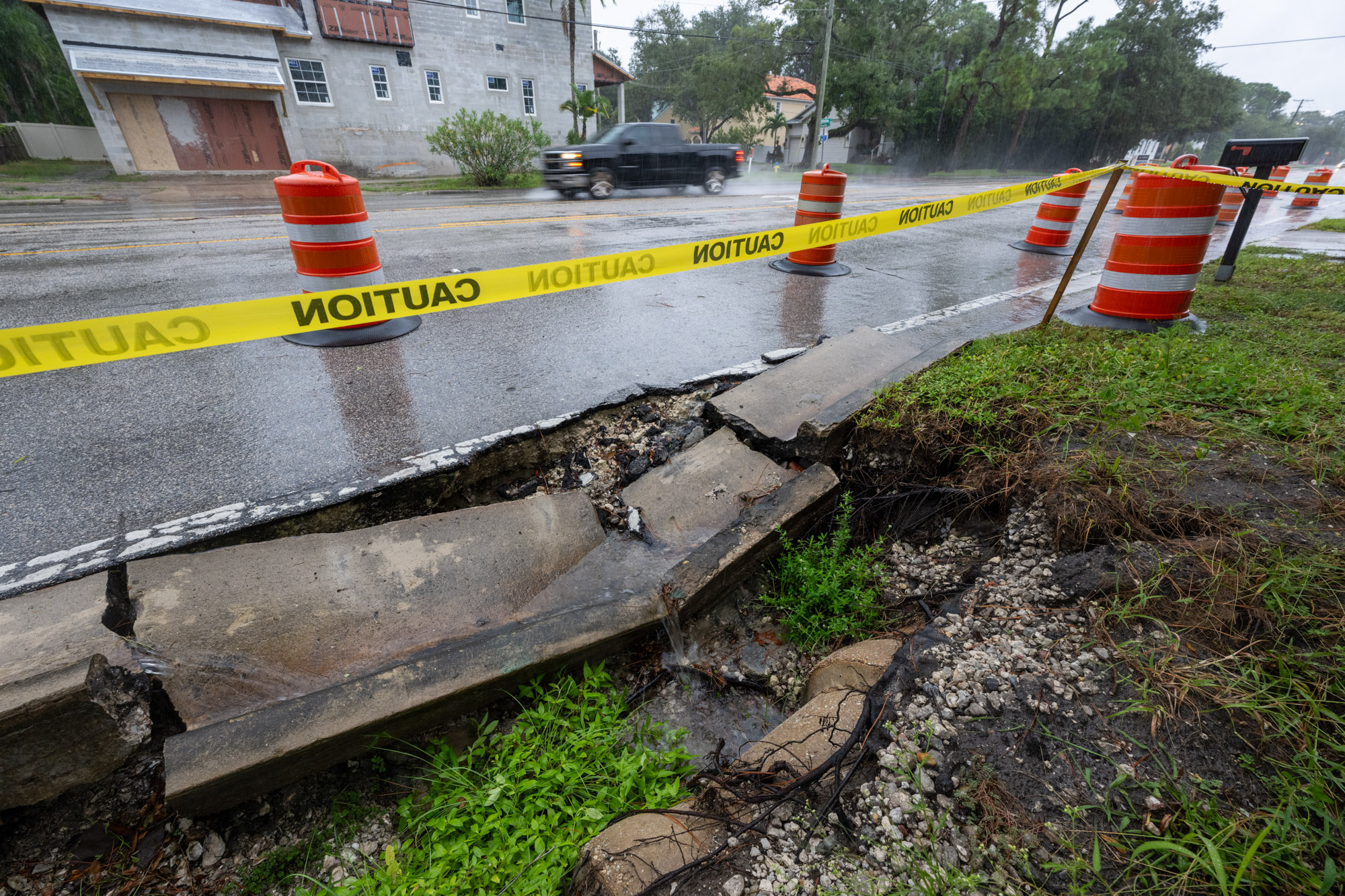
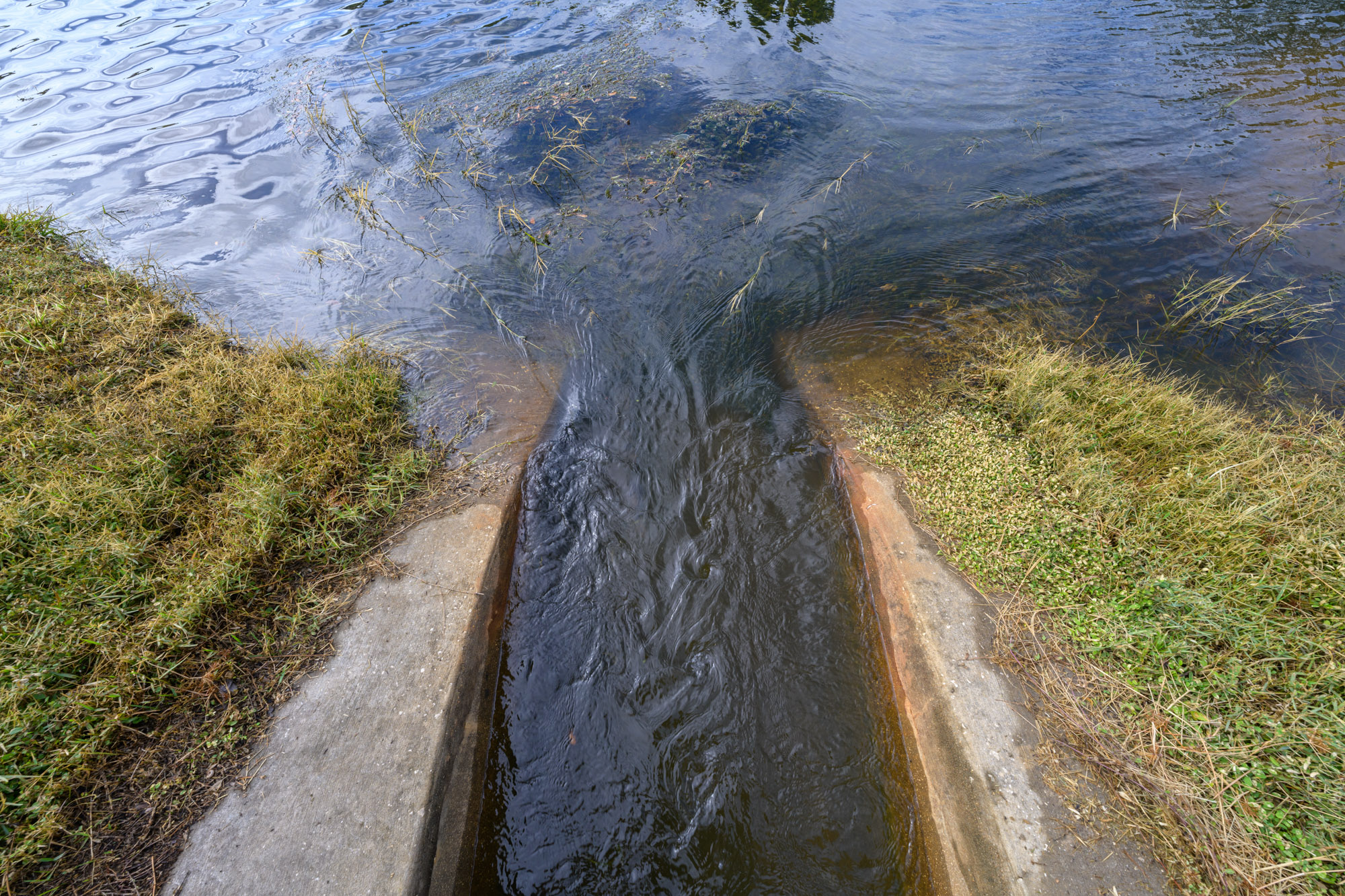
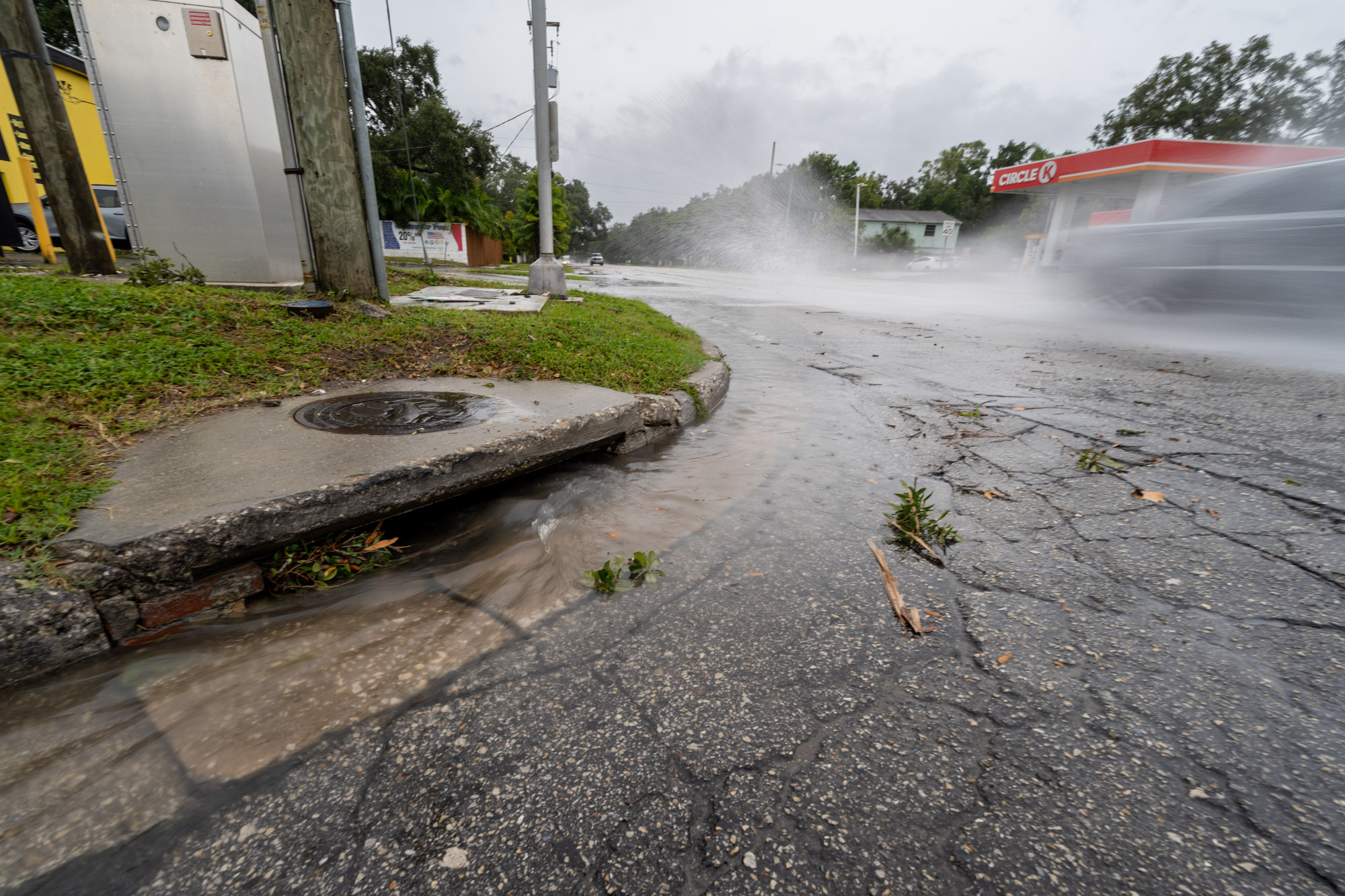
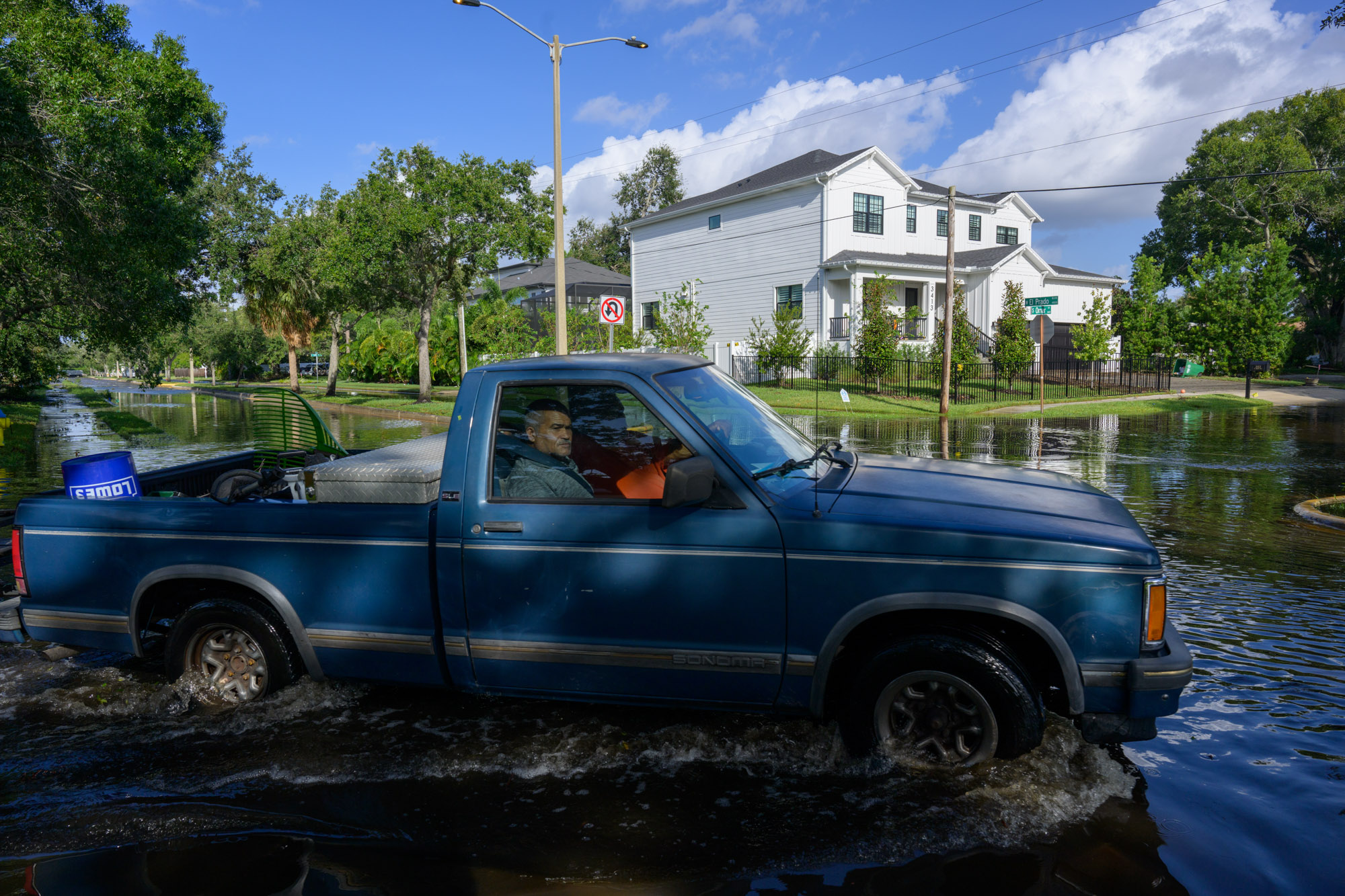
Stormwater threatens Florida’s freshwater as well as the wildlife and people who depend on it.
Photographer Jason Gulley took a look at the widespread impacts of stormwater to the state’s aquaculture, recreation and tourism industries. The good news, updates to the Clean Waterways Act passed by the Florida state legislature last year stand to enhance Florida’s water quality, support ecosystems, and protect public health.
To learn more visit wildpath.com/water
Individual Photo Captions:
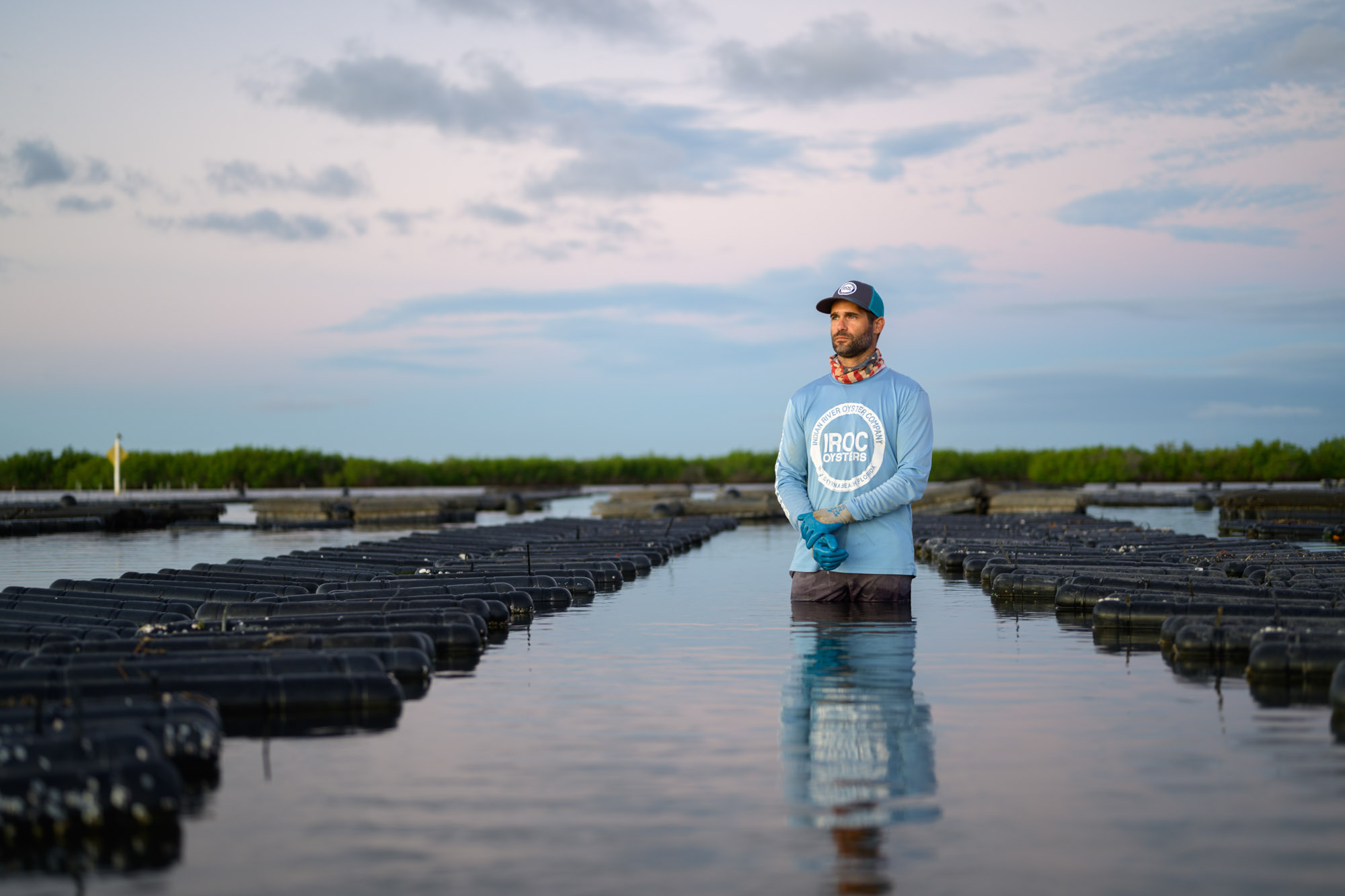
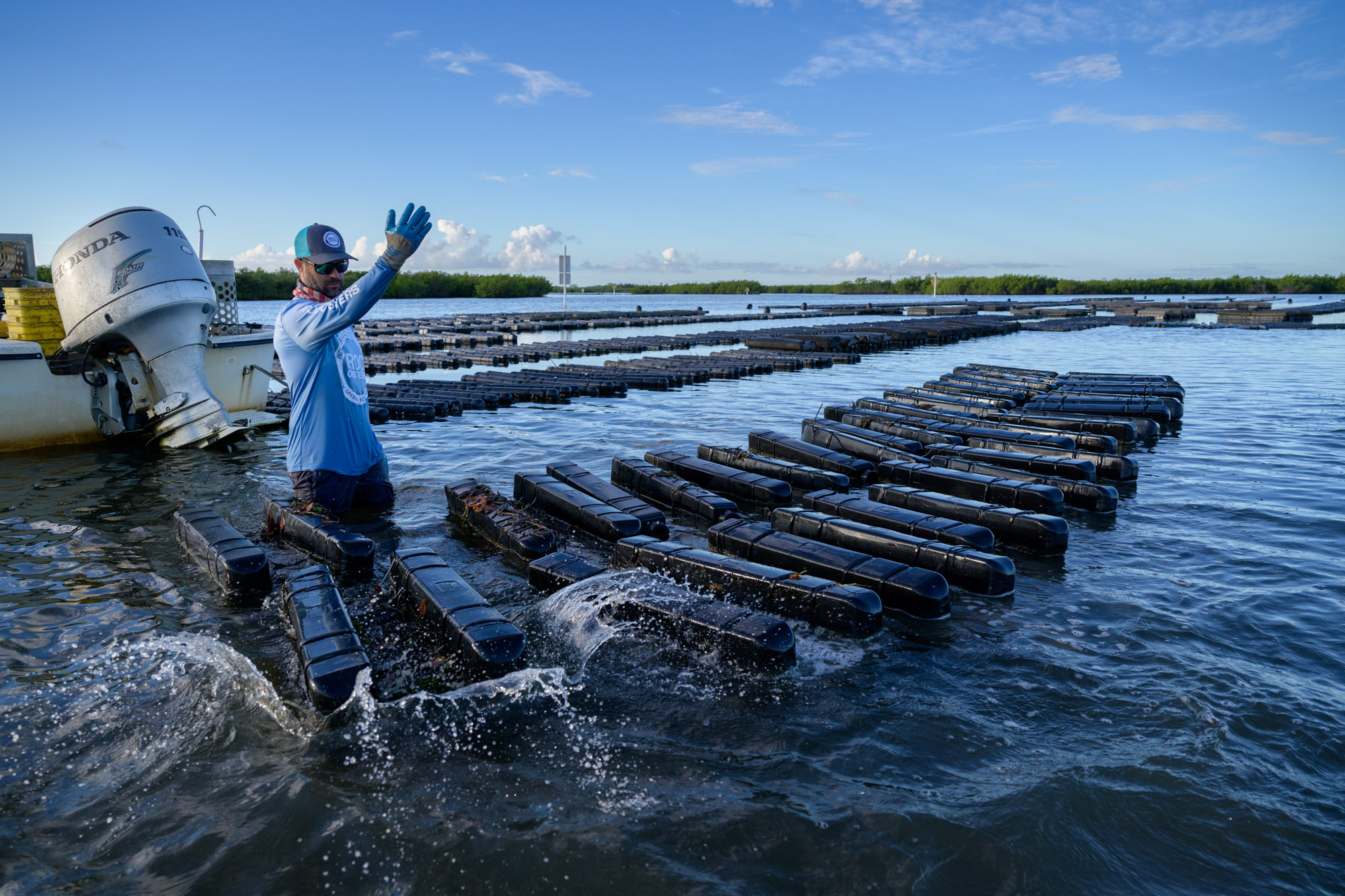
Photo 1: Ryan Norris, one of the founders of the Indian River Oyster Company in New Smyrna Beach, stands between rows of floating oyster bags in his Indian River Lagoon oyster farm.
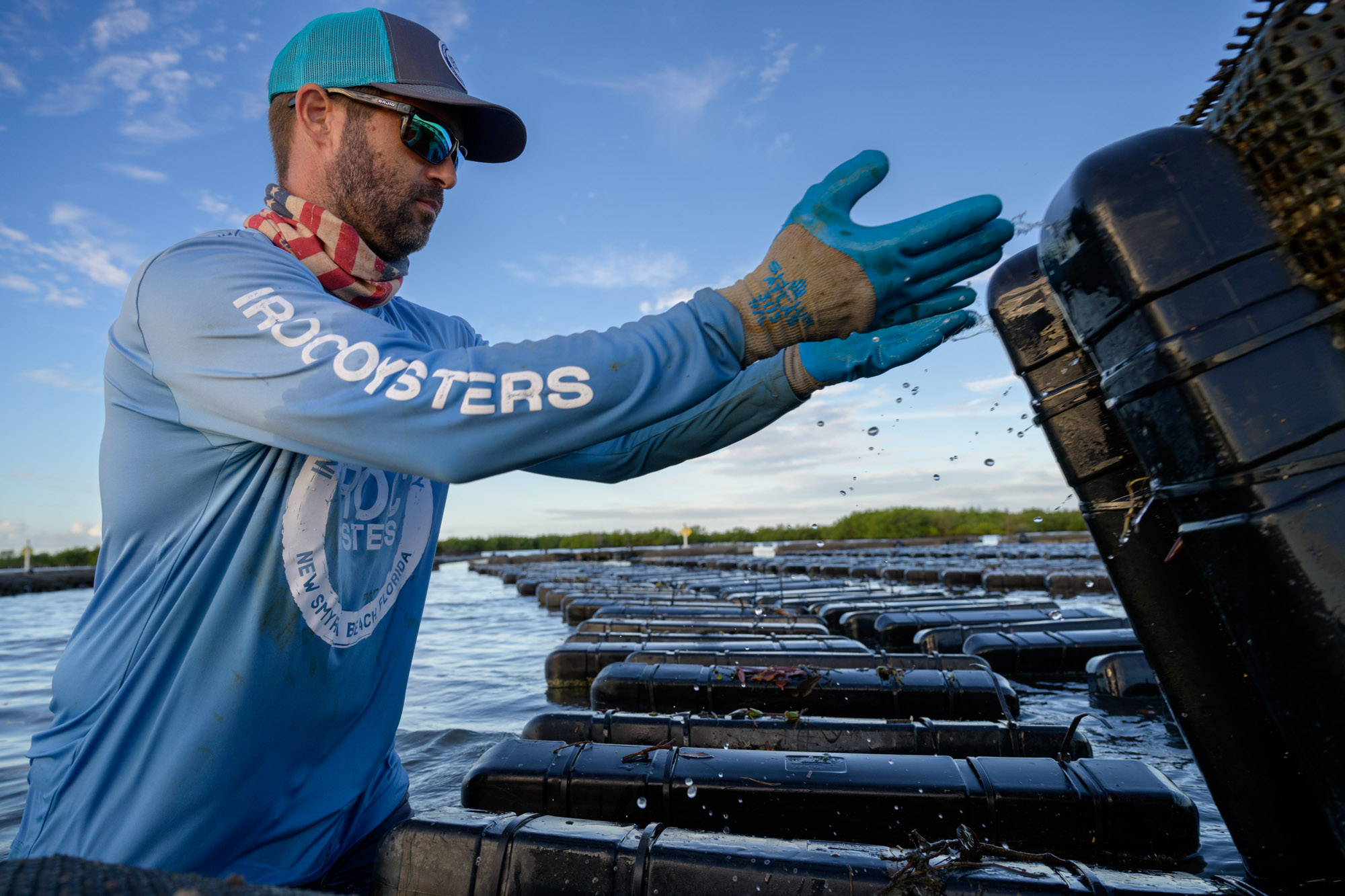
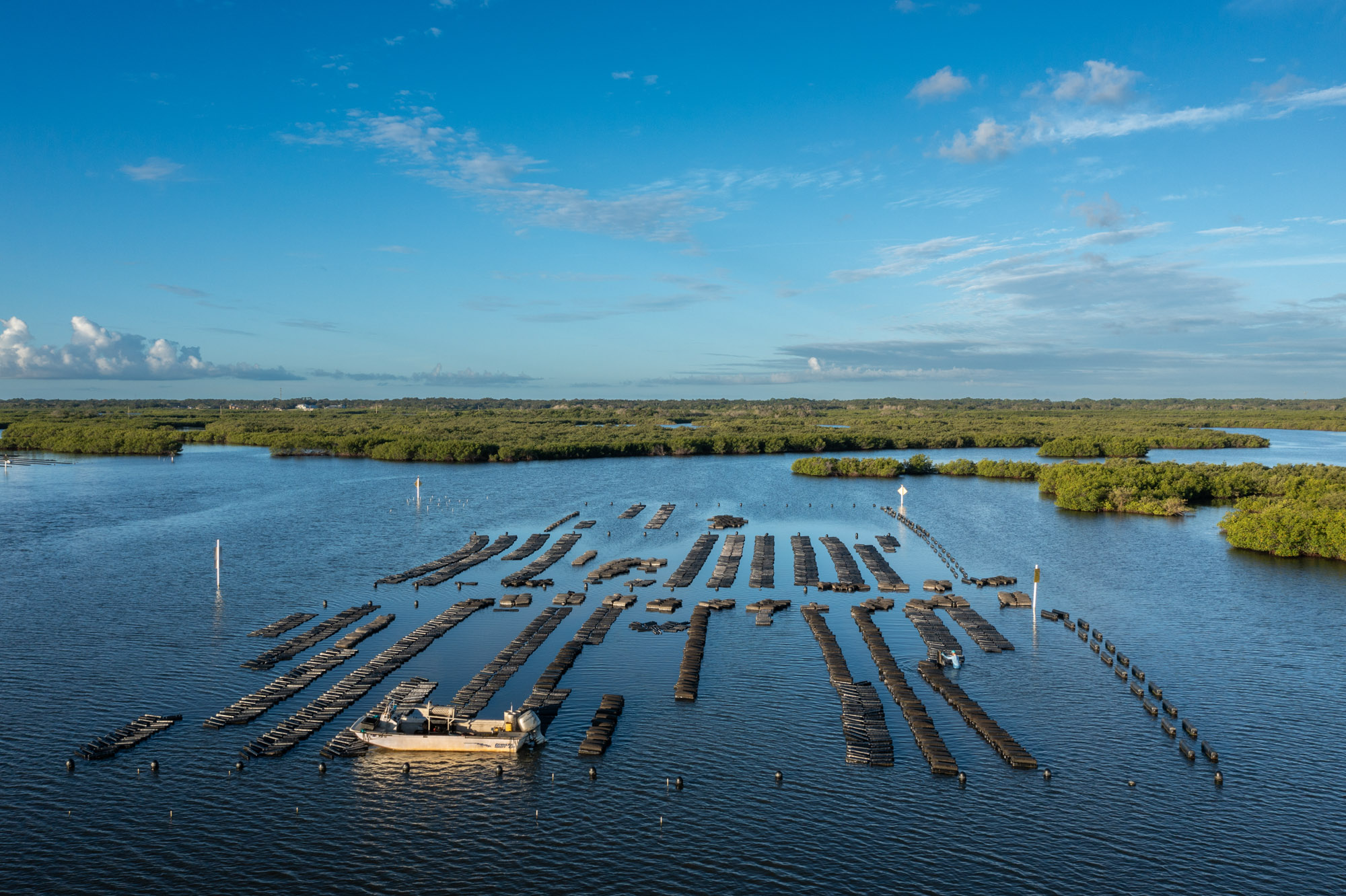
Photo 2 and 3: Ryan Norris, one of the founders of the Indian River Oyster Company in New Smyrna Beach, flips floating bags of oysters at one of his Indian River Lagoon oyster farms. The bags are flipped frequently to expose oysters to air or submerge them in saltwater, which keeps the shellfish healthy and growing.
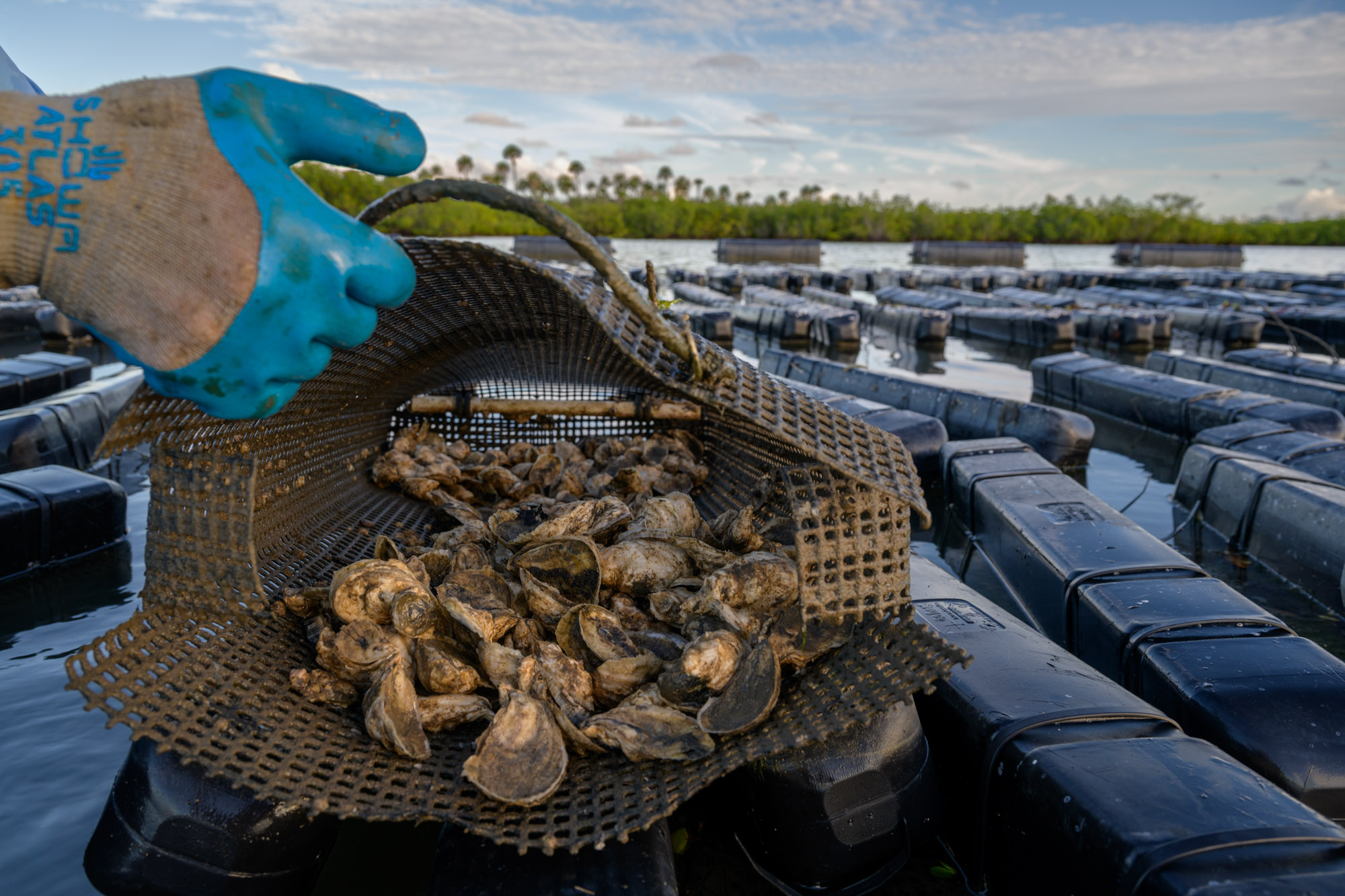
Photo 4: Ryan Norris, one of the founders of the Indian River Oyster Company in New Smyrna Beach, opens a bag of oysters at one of his Indian River Lagoon oyster farms.
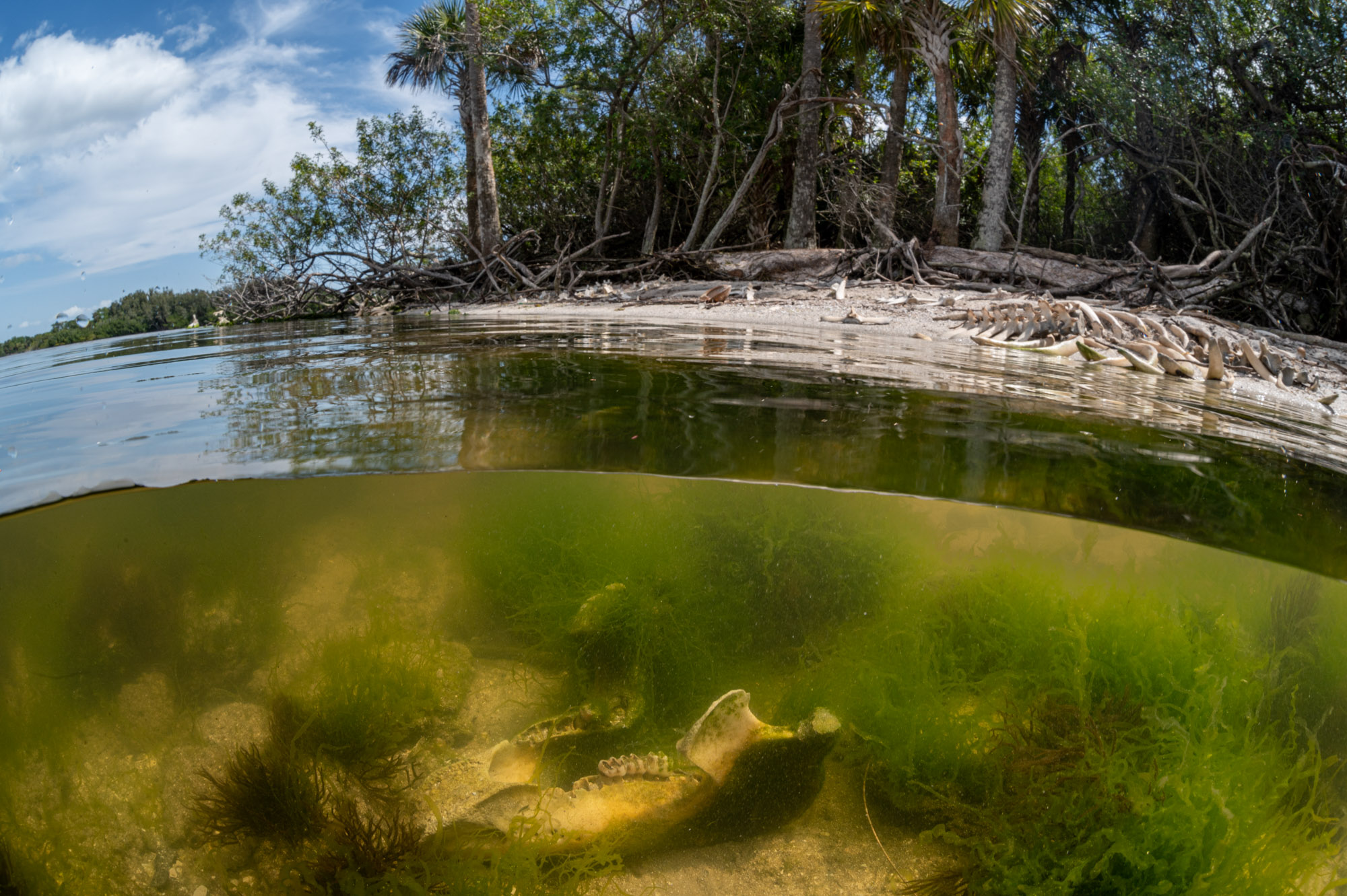
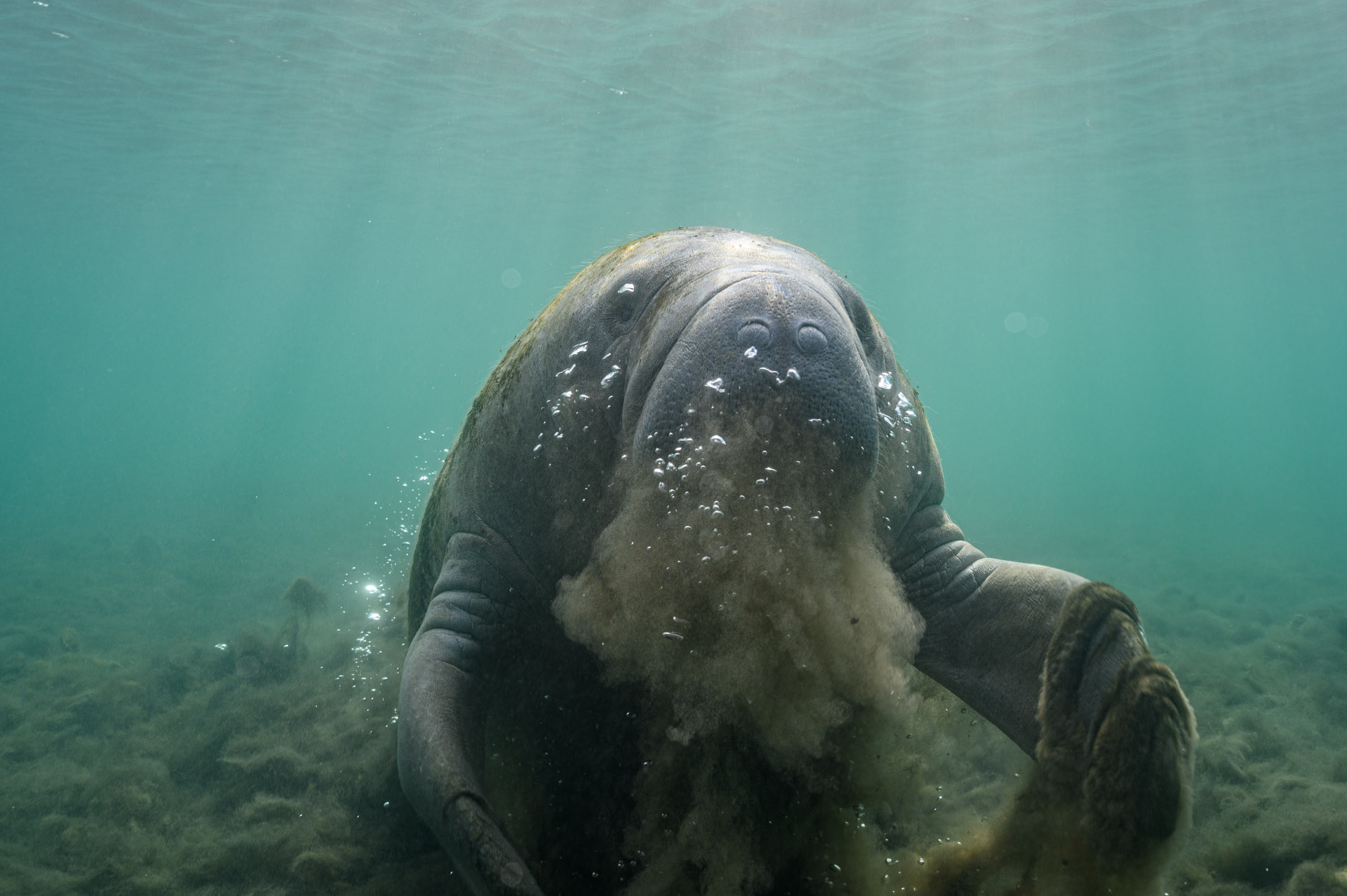
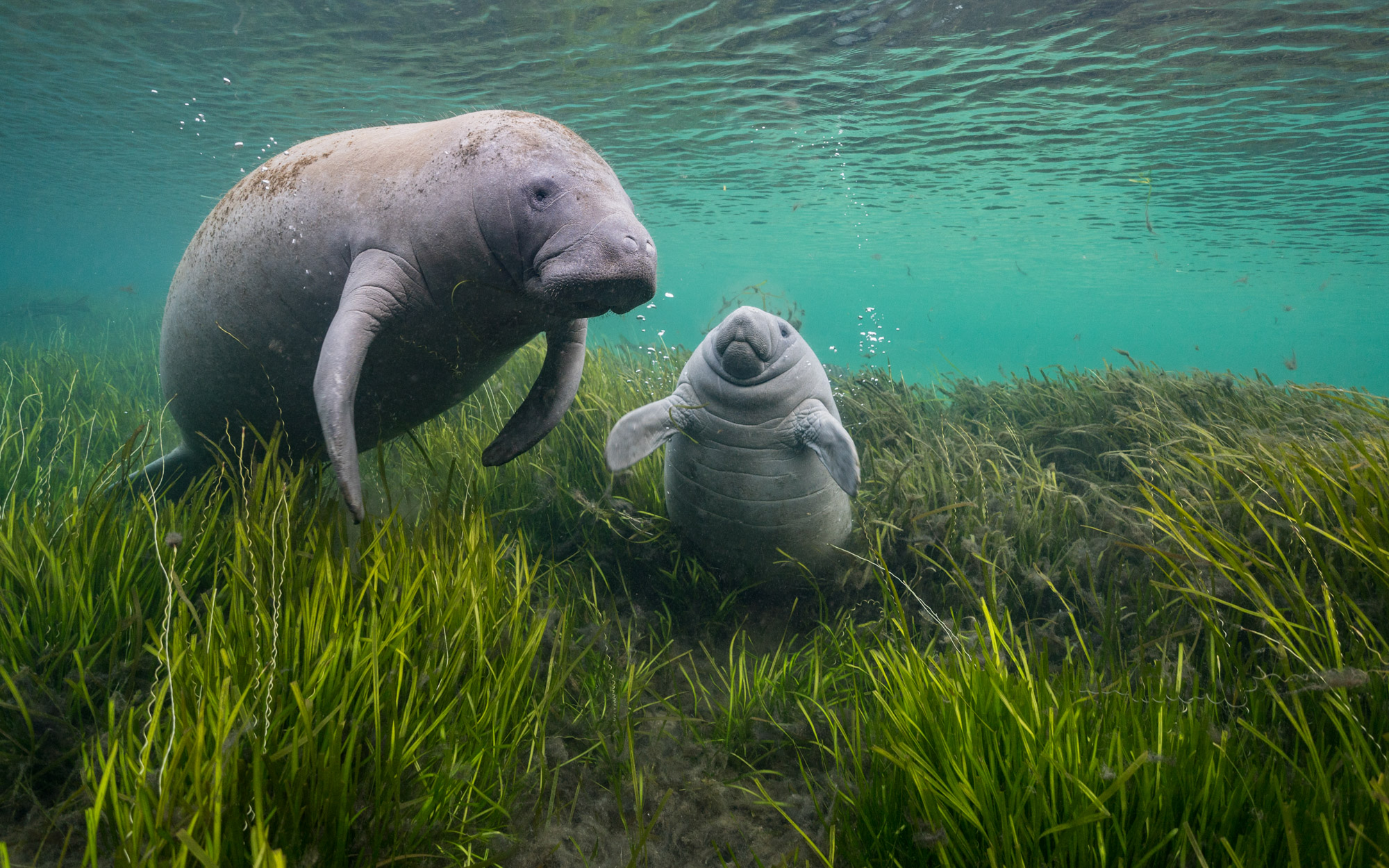
Photo 5: Algae covers a manatee’s jawbone in the shallow water of Indian River Lagoon, while the bones of another manatee are bleached by the sun on a remote island shore. Nearly 2,000 manatees died in 2021 and 2022, shattering annual fatality records for the species. Deaths were concentrated in Indian River Lagoon where nutrient pollution had triggered explosions of algae that choked out the seagrasses manatees. With no food, they starved.
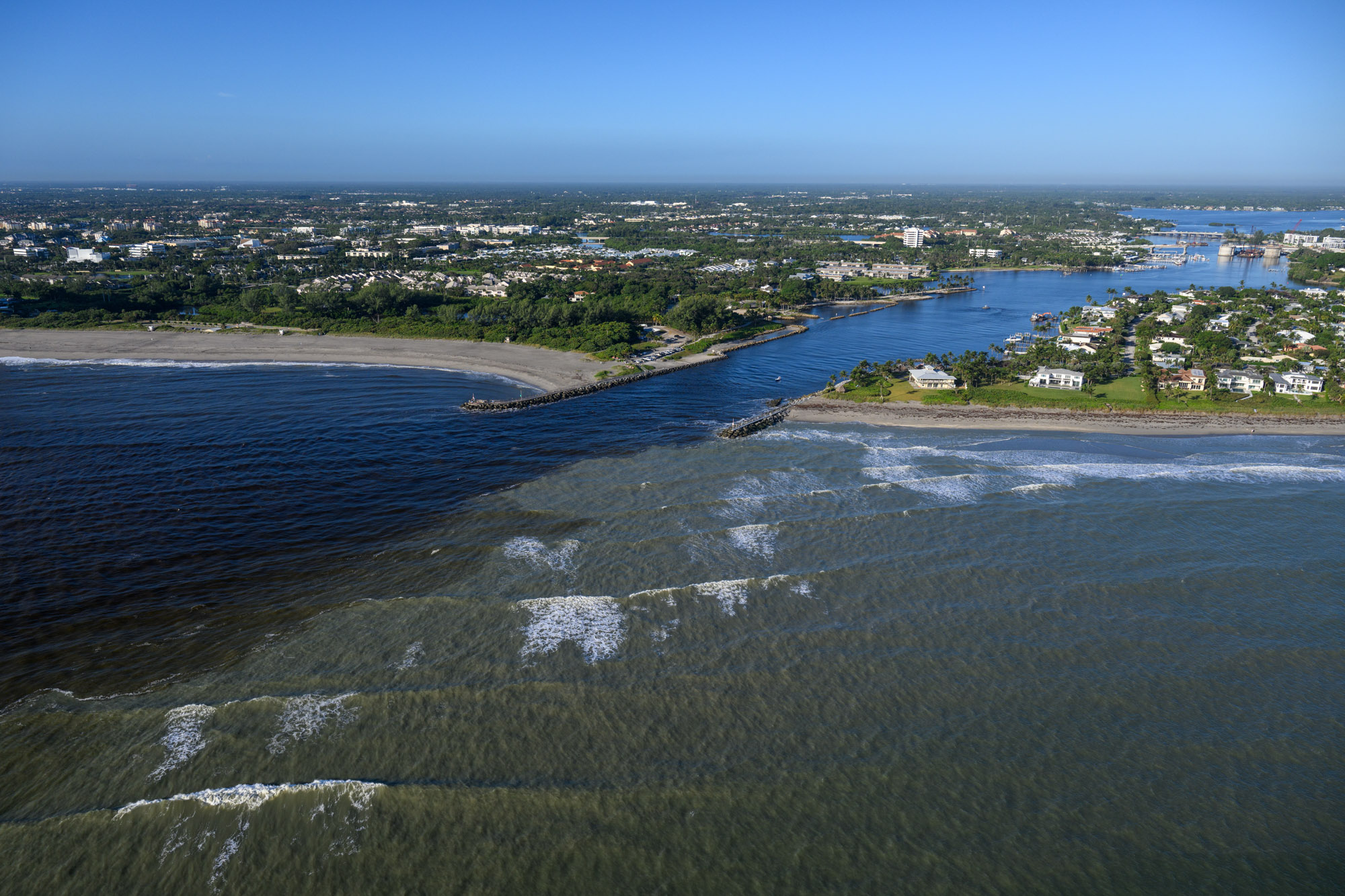
Photo 6: Fresh, tannic water from the St. Lucie River pours through the Jupiter Inlet and collides with the Atlantic Ocean. Stormwater runoff from surrounding urban and agricultural areas flood the river with pollution following heavy rains.
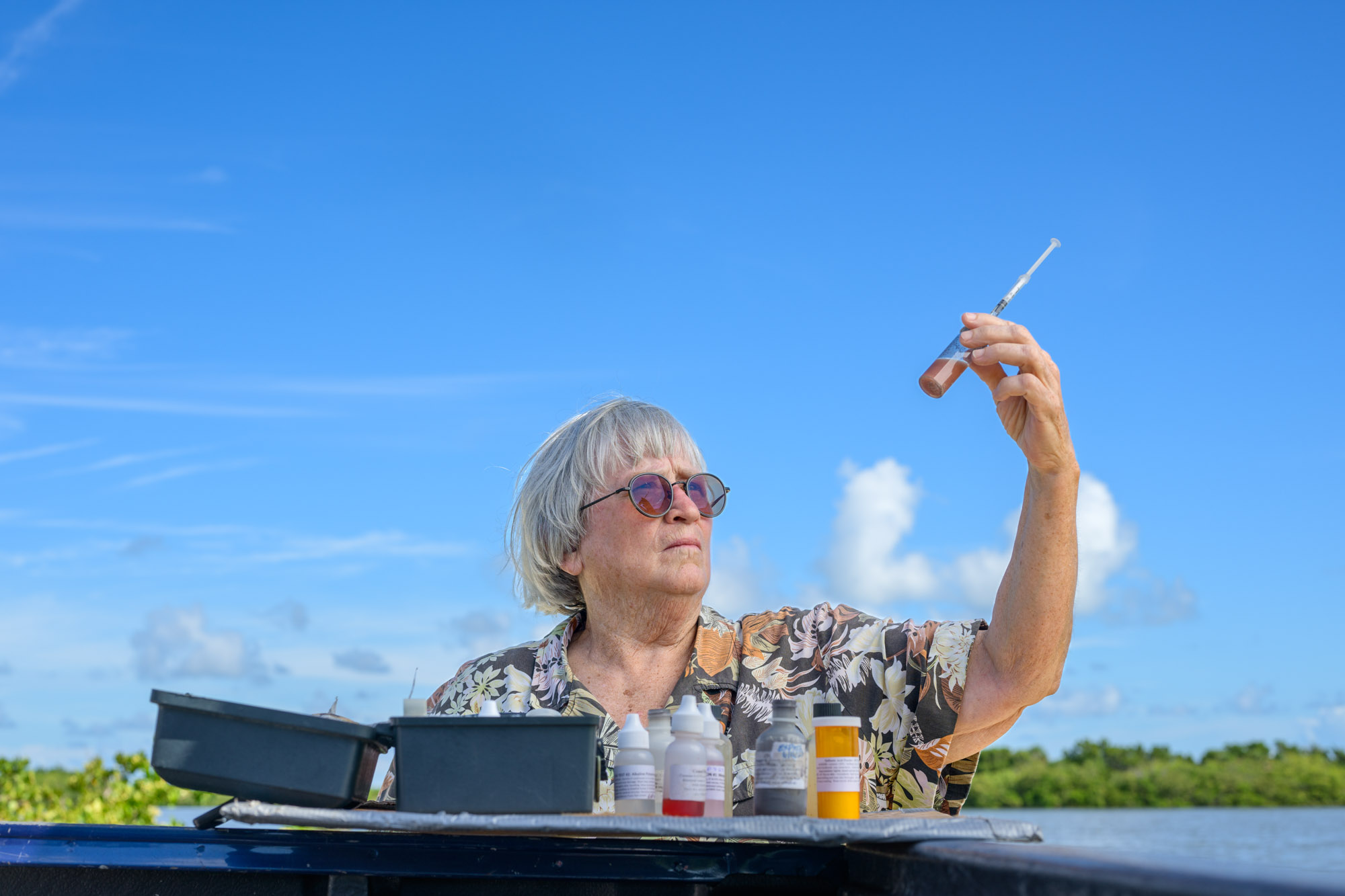
Photo 7: Laurilee Thompson, a fifth generation Floridian and co-owner of the famed Dixie Crossroads seafood restaurant in Titusville, Florida tests the water quality in Mosquito Lagoon.
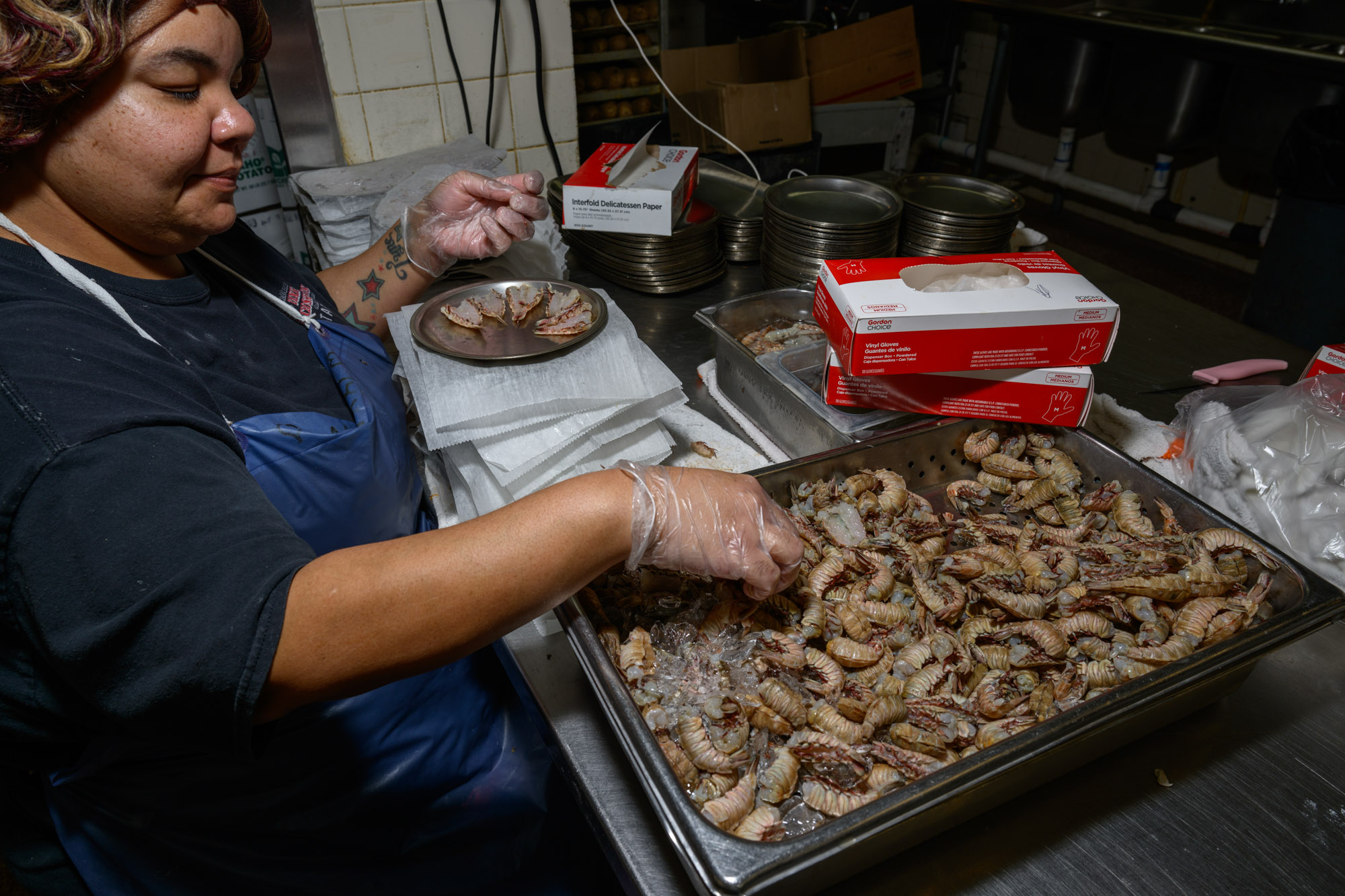
Photo 8: Nicole Richard places rock shrimp on a metal plate in the kitchen at Dixie Crossroads, an internationally renowned seafood restaurant in Titusville, Florida. Once considered a trash shrimp that was tossed overboard, the owners of Dixie Crossroads developed increasingly sophisticated techniques to peel the rock shrimp’s thick, spiny shell. The meat has a flavor similar to lobster that has helped make the restaurant famous.
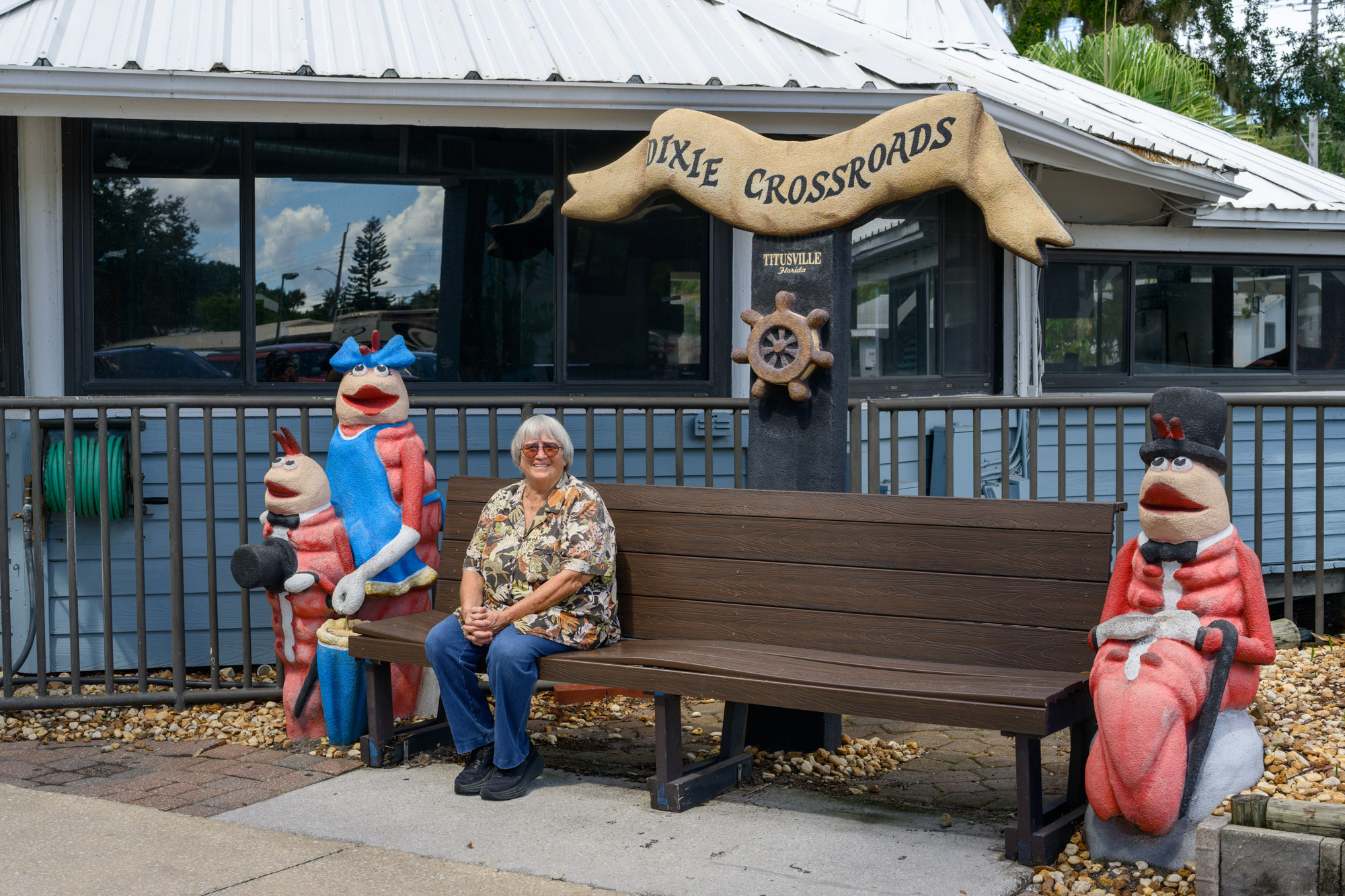
Photo 9: Laurilee Thompson, a fifth generation Floridian and co-owner of the famed Dixie Crossroads seafood restaurant in Titusville, Florida sits in front of her restaurant.